
The history of soccer dates back over 2,000 years, with early
forms of the game played in ancient civilizations such as China,
Greece, and Rome. The Chinese game of Cuju is often considered the
earliest known version of soccer, where players kicked a leather ball
into a small net without using their hands. Over time, various cultures
developed their own versions of ball-kicking games, but it was in England
during the 19th century that modern soccer began to take shape. Schools
and clubs in England started creating standardized rules, and in 1863,
the Football Association (FA) was formed, officially separating soccer
from rugby and establishing the foundation for the modern game.
From there, soccer quickly spread across Europe and to other continents
through trade, travel, and colonization. The sport gained massive
popularity for its simplicity and the minimal equipment it required.
The first international soccer match took place in 1872 between England
and Scotland, and by the early 20th century, the game had become a global
phenomenon. FIFA was established in 1904 to oversee international competition,
and the first FIFA World Cup was held in 1930 in Uruguay. Since then, soccer
has evolved into the world’s most popular sport, uniting millions of fans and
players in a shared passion that transcends borders and cultures.
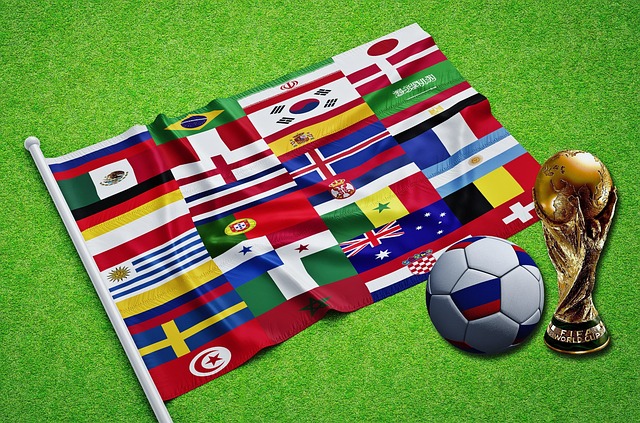
The Soccer World Cup, officially known as the FIFA World Cup,
is the most prestigious tournament in international soccer.
Organized by the Fédération Internationale de Football Association (FIFA),
it takes place every four years and brings together the best national teams
from around the world. The competition begins with regional qualifying matches,
leading up to a month-long final tournament hosted by a chosen country. Teams
compete in group stages and knockout rounds until two remain to play for the
championship. The World Cup trophy, awarded to the winning team, symbolizes the
highest achievement in the sport.
The tournament is more than just a sporting event; it’s a global celebration of
culture, unity, and passion. It attracts billions of viewers worldwide, with
fans proudly supporting their countries and sharing in the excitement of every match.
The World Cup has produced some of soccer’s most iconic moments and legendary players,
such as Pelé, Diego Maradona, and Lionel Messi. Beyond the competition, the event fosters
international friendship and showcases the power of sports to bring people together,
regardless of language or background.
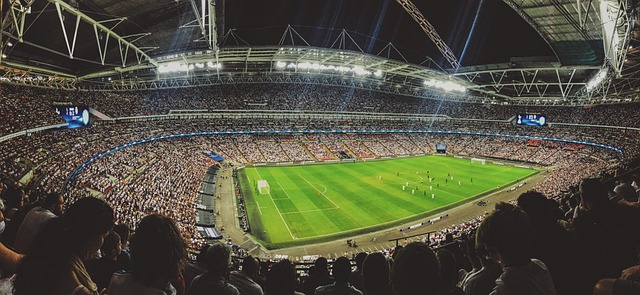
The Soccer World Cup, officially known as the FIFA World Cup,
is the most prestigious tournament in international soccer.
Organized by the Fédération Internationale de Football Association (FIFA),
it takes place every four years and brings together the best national teams
from around the world. The competition begins with regional qualifying matches,
leading up to a month-long final tournament hosted by a chosen country. Teams
compete in group stages and knockout rounds until two remain to play for the
championship. The World Cup trophy, awarded to the winning team, symbolizes the
highest achievement in the sport.
The tournament is more than just a sporting event; it’s a global celebration of
culture, unity, and passion. It attracts billions of viewers worldwide, with
fans proudly supporting their countries and sharing in the excitement of every match.
The World Cup has produced some of soccer’s most iconic moments and legendary players,
such as Pelé, Diego Maradona, and Lionel Messi. Beyond the competition, the event fosters
international friendship and showcases the power of sports to bring people together,
regardless of language or background.